
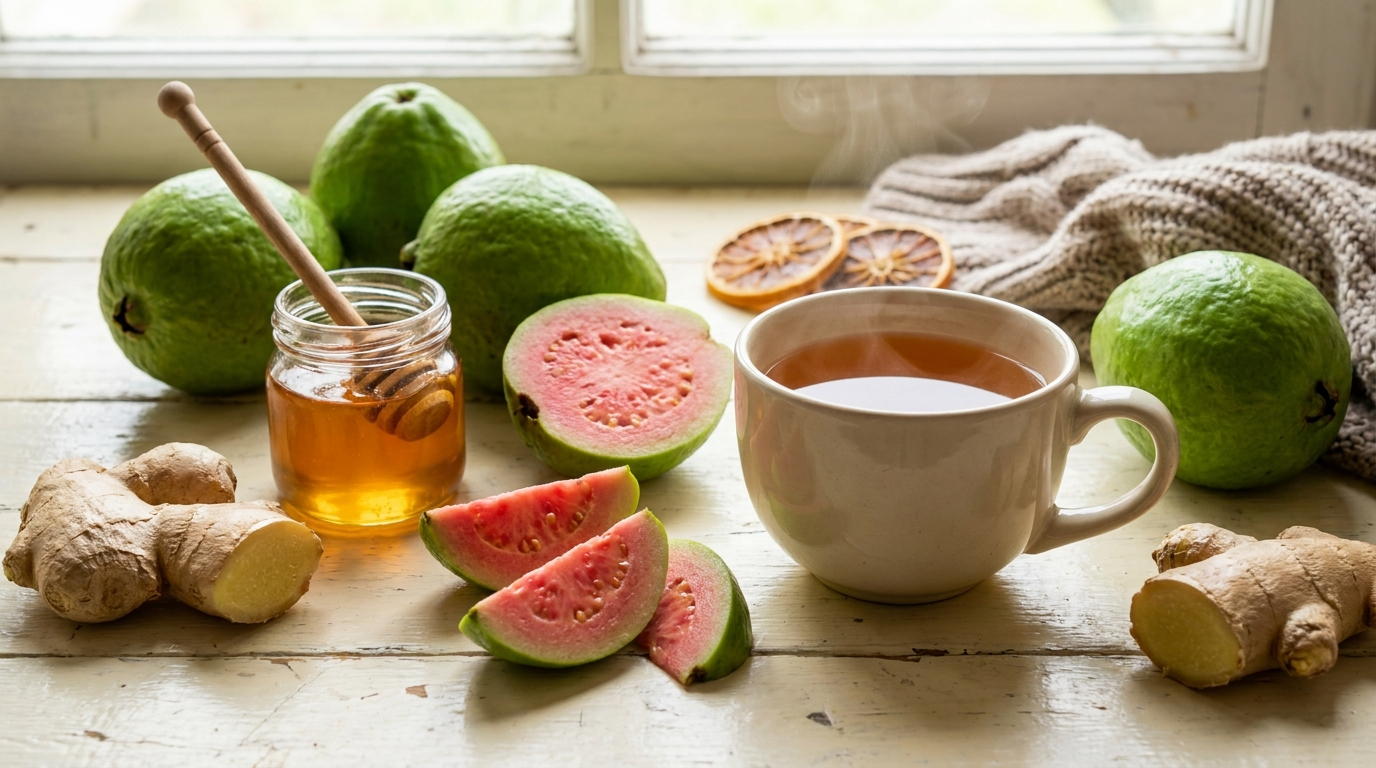
A common belief says guava causes cold and cough, especially in winter. In fact guava is one of the richest fruit sources of vitamin C. Here is where the myth comes from — and the sensible truth.
The short answer
No, guava does not cause cold and cough. In fact, guava is one of the richest common fruit sources of vitamin C — a nutrient associated with supporting immunity.
The widespread belief that guava triggers cold is a traditional one, not a scientific finding. That said, there is a grain of practical truth about temperature and ripeness worth understanding. This is general food information, not medical advice.
Where the myth comes from
In traditional Indian food classification, guava is often labelled a 'cold' or cooling food, and cold foods are believed to aggravate cough or congestion — particularly when eaten at night or in winter.
The likely real-world basis: eating cold, hard, under-ripe guava straight from the fridge can irritate a sensitive throat, and the fruit's small hard seeds can trigger a tickle or cough in some people. That physical irritation gets remembered as 'guava caused my cold', when the fruit itself did nothing of the sort.
What guava actually does for immunity
The nutrition points in guava's favour during cold season.
- Very high vitamin C — several times that of an orange gram for gram, supporting the immune system.
- Antioxidants — guava contains compounds that help the body deal with everyday oxidative stress.
- Fibre — supports gut health, which is linked to overall immune function.
- Hydration and nutrients — a nutrient-dense, hydrating fruit that is genuinely helpful, not harmful, during cold season.
Can you eat guava during a cold or cough?
For most people, yes — and the vitamin C is a bonus. The sensible adjustments during an active cold or sore throat are about comfort, not danger: eat guava at room temperature rather than chilled, choose ripe soft fruit, and if seeds irritate your throat, remove them or eat guava as warm stewed fruit or as juice.
If your throat is very sore, softer or cooked forms are gentler.
How to eat guava in cold season
Simple habits that keep winter guava throat-friendly.
- Bring it to room temperature before eating — never straight from the fridge.
- Choose ripe, soft fruit over hard under-ripe guava.
- Sprinkle a little black salt and roasted cumin — a traditional, throat-friendly way to eat it.
- If you have a sore throat, try warm stewed guava or a small glass of fresh guava juice instead of the raw hard fruit.
The bottom line
Guava does not cause cold or cough. It is a vitamin-C-rich, immune-supporting fruit. Just eat it ripe and at room temperature during the cold months, and it works in your favour rather than against you.
Frequently asked questions
Does guava cause cold and cough?+
No. Guava does not cause cold or cough — it is actually rich in vitamin C, which supports immunity. The belief comes from traditional 'cold food' classification, and from cold, hard, under-ripe fruit irritating a sensitive throat.
Can we eat guava during cold and cough?+
Yes, for most people. Eat it at room temperature, choose ripe soft fruit, and if your throat is sore try warm stewed guava or juice instead of the raw hard fruit.
Is guava good for immunity?+
Yes. Guava is one of the richest fruit sources of vitamin C, along with antioxidants and fibre — all supportive of the immune system.
Should I eat guava cold from the fridge?+
Preferably not, especially in cold season or if your throat is sensitive. Bring it to room temperature first — chilled hard fruit is more likely to irritate the throat.
Keep reading
Order or enquire on WhatsApp
Talk to us about the Amrood Range, bulk pulp orders, or anything you read here. We reply within one business day.
Chat on WhatsApp