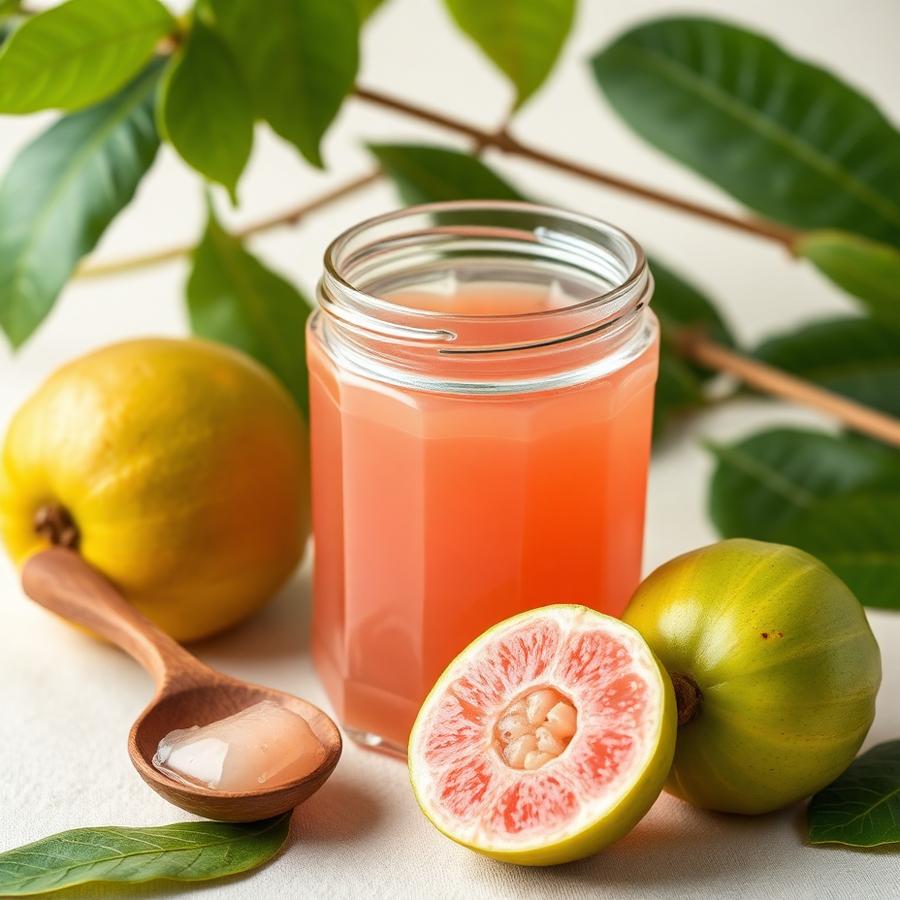
They come from the same fruit but they are three different products. Here is a clear, honest comparison — texture, sugar, shelf life, price — and a simple guide to which one you actually want on your shelf.
The three products, side by side
Jelly, jam and pulp all start with guava, but the processing splits them into three distinct products with different textures, different sugar levels and different uses in a kitchen.
| Jelly | Jam | Pulp | |
|---|---|---|---|
| Texture | Translucent, quivering, spreadable | Thick, opaque, spoonable | Smooth, flowing, sauce-like |
| Fruit form | Strained fruit juice | Whole cooked fruit | Sieved fruit puree |
| Typical sugar | 60–65 percent | 50–60 percent | 0–5 percent added |
| Shelf life (unopened) | 12+ months ambient | 12+ months ambient | 12–18 months frozen or aseptic; 5–7 days fresh chilled |
| Best used for | Toast, cheese boards, glazes, tarts | Toast, sandwich fillings, thumbprint cookies | Juice, smoothies, ice cream, mousse, bakery fillings |
| Indicative price band per 100 g | ₹60–100 | ₹40–80 | ₹8–20 (bulk); ₹25–45 (retail pouch) |
Why guava sets naturally
Guava is one of the more pectin-rich fruits eaten in India — considerably higher in natural pectin than mango, papaya or banana. Pectin is the plant compound that lets fruit juice set into a jelly when cooked with sugar and a little acid.
Practically, this means guava jelly needs less added setting agent than jelly made from most other fruits. A well-made guava jelly can set from nothing more than the fruit's own juice, cane sugar and a squeeze of lime. That is not a marketing line. It is why the traditional Indian amrood jelly recipe has always been so simple, and why the jelly is translucent rather than cloudy — the pectin gives it clarity.
Six things to do with guava pulp beyond juice
Pulp is the most versatile of the three. If you have a 1 kilogram pack in the freezer, here is what to do with it.
- Guava kulfi — fold thawed pulp into a base of reduced milk, sugar and cardamom, pour into moulds, freeze.
- Guava cheesecake — swirl pulp through a set cheesecake base, or reduce it with a little sugar and use as a topping.
- Guava mousse — fold whipped cream into pulp sweetened lightly and stabilised with a touch of gelatin.
- Guava chilli chutney — cook pulp with jaggery, red chilli, ginger and roasted cumin for a sweet-hot condiment.
- Guava sorbet — freeze pulp with sugar syrup and lime for a two-ingredient sorbet.
- Bakery fillings — the classic use in a professional bakery: pulp reduced with sugar makes a filling for danish pastries, tarts and stuffed cookies.
How to read the label
Not every jar on the shelf is what it claims to be. Three things to check before you buy any guava jelly, jam or pulp.
- Fruit percentage. On jelly, look for at least 45 percent fruit. On jam, at least 45 percent (higher is better). On pulp, look for 100 percent guava, ideally with nothing else listed.
- Added colour. Guava does not need it. If you see Sunset Yellow, Ponceau 4R or any INS colour code listed, put the jar back. Real pink guava pulp is pink because the fruit is pink.
- Preservative class. Class I preservatives (like potassium sorbate, sodium benzoate) are common and legal in small quantities. If the label lists them, that is fine — the question is whether you personally want them. A no-added-preservative product is possible but usually needs refrigeration after opening.
Which one should you actually buy?
The right choice depends less on the product and more on the use case.
Buy jelly if you want something to spread on toast, glaze a tart, serve with cheese, or gift. It is the most refined of the three and the one that carries the fruit's aroma most clearly on the palate.
Buy jam if you want a fruit-forward sandwich filling, a thumbprint cookie centre, or a spoon-into-yoghurt option. It is chunkier, more workaday, and easier to bake with.
Buy pulp if you cook. Pulp is the raw material — one kilogram opens the door to six different desserts, a batch of kulfi, and enough juice for a party. It is also the cheapest per kilogram by a wide margin.
The right answer for most households is jelly on the breakfast shelf and pulp in the freezer. Jam is optional and largely a matter of preference.
Shop the range
All three exist in the Amroodwala range — real Sawai Madhopur fruit, small batches, no artificial colour. Head to the product page to see current pack sizes and pricing.
Frequently asked questions
Which has more fruit — jelly or jam?+
By weight of visible fruit, jam has more — it contains cooked fruit pieces, whereas jelly is made from strained juice only. But by percentage of fruit-derived matter in the finished jar, a good jelly and a good jam are often similar (around 45–55 percent). Jelly just does not look as chunky because the fruit has been strained.
Can I make jelly from pulp at home?+
Yes, but with a caveat. To make a truly clear jelly you need juice, not pulp. If you cook pulp with sugar you will get a soft, opaque jam rather than a translucent jelly. For clear jelly, blend guava with water, boil, strain through muslin, and cook the strained juice with sugar and lime.
Does guava jelly need refrigeration after opening?+
Yes. Even a well-preserved jelly is a natural food product once opened. Keep it refrigerated after opening, use a clean dry spoon, and it will hold quality for 4 to 6 weeks.
Keep reading
Order or enquire on WhatsApp
Talk to us about the Amrood Range, bulk pulp orders, or anything you read here. We reply within one business day.
Chat on WhatsApp