Everyone comes to Sawai Madhopur for the tigers. Very few know that the same district is one of Rajasthan's most important fruit belts. A traveller's guide to what to actually eat — and what to carry home.
The Tiger City is also an orchard district
Sawai Madhopur is the gateway to Ranthambore National Park and has picked up the informal nickname Tiger City of Rajasthan. Tourism, understandably, is built around the safari — the pre-dawn jeep line, the fort at sunrise, the wait at Zone 3 for a tigress and her cubs.
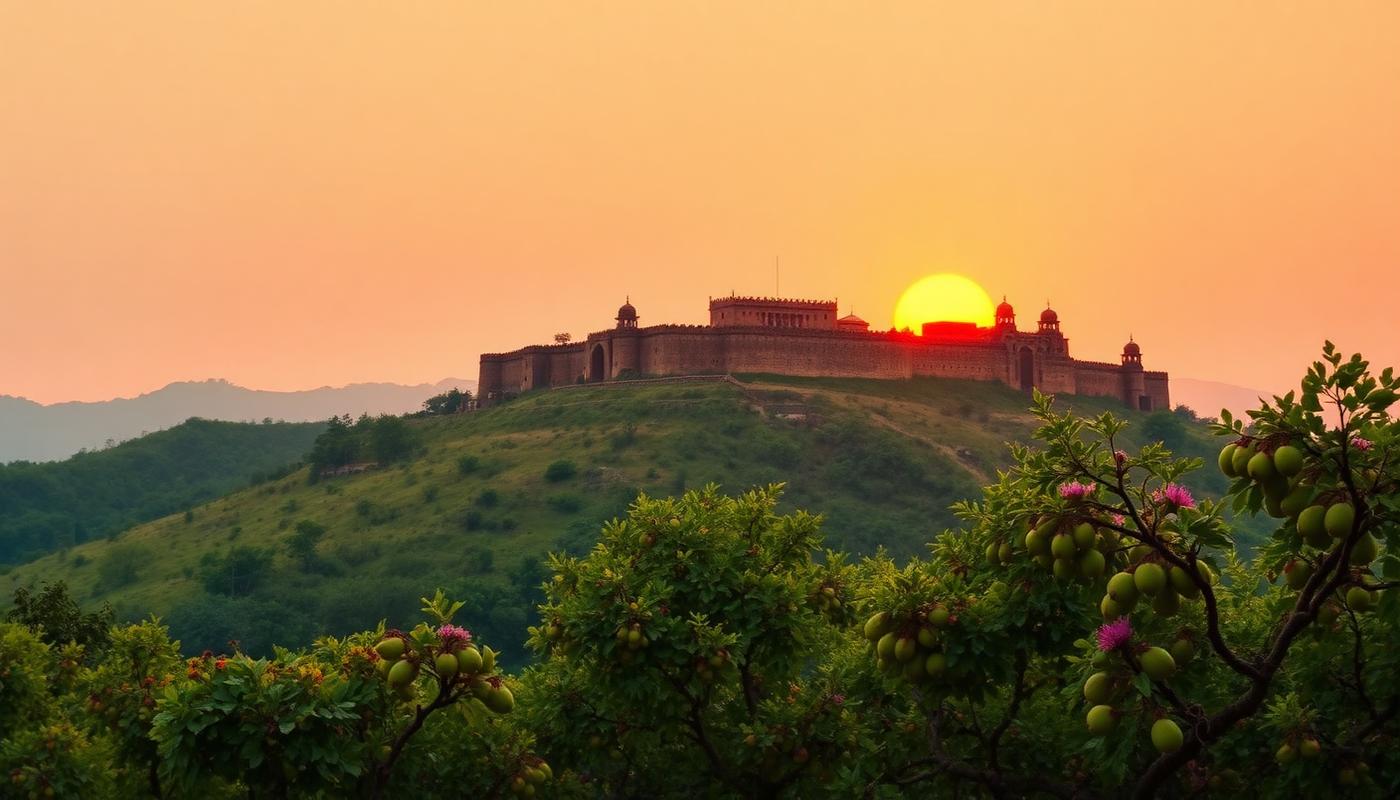
What almost every traveller misses is that outside the park boundary, the district is a working agricultural belt. Wheat, mustard, gram — and, in a swathe of villages between Bamanwas, Bonli and Gangapur City, guava. The district is Rajasthan's flagship guava producer and holds the state's ODOP recognition for the fruit. If you have driven from the station to your hotel, you have passed the orchards. You just did not know what you were looking at.
The orchards on the way in
Drive from Sawai Madhopur Junction toward the park in the winter months and you will pass small, neatly kept guava orchards along the road. Rows of guava trees — shorter and rounder than a mango tree, silver-green leaves, low fruit hanging within an arm's reach. Roadside stalls appear from November onward, selling fruit by the basket at prices no city market will match.
If your driver is willing, a five-minute stop at a roadside stall in the winter months is one of the more honest food experiences in the district. The fruit is often on the tree that morning. Ask for the pink-fleshed variety if the seller has both — this is when you find out what a real Sawai Madhopur amrood tastes like.
Local dishes and sweets worth trying
The everyday food of Sawai Madhopur belongs to the broader Rajasthani tradition — dal baati churma, gatte ki sabzi, ker sangri, bajra roti with lehsun chutney — cooked with the region's characteristic use of ghee and dried spices. Most hotel restaurants serve a competent version. The dhabas along the highway serve a better one.
Where the district gets more specific is in its sweets, and specifically in what it does with the winter guava crop. Amrood ki barfi — guava katli made by slow-reducing pulp with khoya and cardamom — is a seasonal sweet you will find in local mithai shops during the cold months. It is not a year-round item because it depends on winter fruit. If you see it on a counter in December or January, buy it that day; it is a different sweet from the mango or coconut barfi you find elsewhere in India.
Beyond guava, look for Kheer Mohan-style paneer sweets from Alwar (available across this belt of Rajasthan), gajak in the winter, and traditional besan and mawa laddoos from the older halwais in the town centre.
What to carry home
The single mistake most first-time visitors make is buying fresh guava at the station on the way out. Fresh fruit does not travel well in luggage — it bruises, ripens further, and often does not survive an overnight train to Delhi in usable condition.
The better strategy is to buy shelf-stable versions of the same fruit. These are the categories to look for.
- Guava jelly — travels well, lasts months unopened, and captures the aroma of winter fruit remarkably accurately.
- Guava pulp in a sealed pouch — for anyone who cooks. Freeze it when you get home and it lasts for months.
- Amrood ki barfi — only in winter. Keep it in the coolest part of your bag and eat within 3 to 5 days of purchase.
- Guava chocolates — the best gift option; hardy, portable, and unusual enough to be memorable.
- Traditional Rajasthani mithai from local halwais — mawa laddoos, gajak in the winter, milk-based sweets in cooler months.
Where to buy authentic local produce
For fresh fruit in season, the district's guava mandi and roadside orchard stalls are the honest option. Prices are low, quality is high, and the person selling you the fruit often grew it.
For processed and packaged products — jelly, pulp, barfi, chocolates — look for FSSAI-licensed local makers based in the district rather than large national brands whose factories are elsewhere. Amroodwala, from Rajasthan Healthy Food in Gangapur City (FSSAI-licensed, District Sawai Madhopur), is one such option; there are others.
Whichever brand you choose, check the packaging for the FSSAI licence number, the manufacturing address, and any list of added colours. Real Sawai Madhopur guava products do not need artificial pink food colour to look pink.
Best months to visit for the guava season
For wildlife, the park's core zones are open October to June. The safari itself is best from October to April, when animal sightings around water sources are more predictable.
For guava specifically, the sweet spot is November to February. This is the winter crop — denser, sweeter, more aromatic — and the season when local barfi and gifting boxes appear in shops. December and January are peak.
A trip planned across those months gives you both: dawn safaris in the park, and a district in full winter-fruit season on the drive back.
Frequently asked questions
What is Sawai Madhopur famous for?+
Two things. Ranthambore National Park, one of India's most celebrated tiger reserves, along with the tenth-century Ranthambore Fort (part of the UNESCO Hill Forts of Rajasthan). And the district's guava, which is its officially recognised ODOP product and supplies markets across northern India.
What food should I take home from Ranthambore?+
Shelf-stable local specialities travel best. Guava jelly, guava pulp (freeze at home), guava chocolates and — if you are visiting in winter — amrood ki barfi. Skip fresh fruit unless you are driving.
When is guava season in Sawai Madhopur?+
The main winter crop runs from November to February, with December and January being peak. A smaller monsoon crop appears from July to September.
Keep reading
Order or enquire on WhatsApp
Talk to us about the Amrood Range, bulk pulp orders, or anything you read here. We reply within one business day.
Chat on WhatsApp